Explainer
Smart Watch Heart Rate, SpO2 and Sleep Tracking: How Accurate Are They?
How accurate is a smart watch? What research says about wrist heart rate, blood oxygen (SpO2) and sleep tracking, why readings go wrong, and how to get better data.
oraimo.ae editorial team9 min read

Smart watch accuracy depends on what you measure. Wrist heart rate is generally close to a chest strap or ECG at rest and during steady exercise such as walking or cycling, but less reliable during intense or arm-heavy workouts. Blood oxygen (SpO2) from the wrist is a rough estimate: studies show mixed results, and a 2021 paper concluded that no mass-market wrist-worn SpO2 monitor meets the medical standards for pulse oximeters. Sleep tracking is good at total sleep time and telling sleep from wake, but only moderately accurate at sleep stages. None of it replaces a medical device, but used correctly, a smart watch is a useful tool for spotting trends in your own health.
This guide summarises what published research says, explains why readings go wrong, and shows how to get the most reliable data from any smart watch, including the oraimo watches we sell in Dubai.
Short answer: how accurate is each smart watch feature?
| Feature | How the watch measures it | What research suggests | Best used for |
|---|---|---|---|
| Heart rate at rest | Optical sensor (PPG) | Close to ECG reference in most studies | Resting heart rate trends |
| Heart rate during exercise | Optical sensor plus motion filtering | Good in steady cardio, more error in high-intensity and arm-heavy exercise | Training zones, effort over time |
| Blood oxygen (SpO2) | Reflected red and infrared light | Mixed; not equal to a medical oximeter | Occasional spot checks while still |
| Sleep duration | Movement plus heart rate | Generally good agreement with lab sleep studies | Bedtime habits, total sleep |
| Sleep stages | Algorithm estimate | Moderate, varies widely by device | Rough pattern only |
| Calories | Estimate from heart rate, movement and profile | Weakest metric in reviews | Comparing days, not counting food |
How does a smart watch measure heart rate?
The green lights on the back of a smart watch are part of a technique called photoplethysmography (PPG). With each heartbeat, the volume of blood in the small vessels under your skin changes slightly, which changes how much light is absorbed. The sensor detects those tiny changes and an algorithm turns them into beats per minute. Some watches, such as the oraimo Watch GT, use a Fresnel lens over the sensor to focus the light.
The method works well when the watch sits still against the skin. Problems start when the watch moves, when light leaks in at the edges, or when blood flow to the skin is low.
How accurate is wrist heart rate?
Research on wrist-worn optical sensors is fairly consistent:
- A 2020 systematic review and meta-analysis in the Journal of Sports Sciences, comparing wrist devices with ECG or chest-strap references, found almost no average bias at rest, but the error grew as heart rate rose during resistance training.
- A 2020 study of several wearables in npj Digital Medicine found that absolute error during activity was on average about 30% higher than at rest, with clear differences between devices and activity types.
- Steady aerobic exercise like cycling or brisk walking tends to be measured reasonably well, while activities with lots of wrist flexing and gripping (weights, boxing, padel, rowing) produce more error.
What this means for you: trust the resting heart rate trend and the general shape of a workout. Do not rely on second-by-second accuracy during interval sprints or gym sessions. If you train seriously by heart rate zones, a chest strap remains the gold standard for consumers.
One UAE-specific note: in hot, humid conditions many people see a higher heart rate at the same pace. That is your body working harder to cool down, not a watch error, so compare your outdoor runs in similar conditions or move hard sessions indoors in summer.
How accurate is smart watch SpO2?
Blood oxygen on a smart watch uses red and infrared light reflected from the wrist, rather than shining light through a fingertip as a clinical pulse oximeter does. That is a harder measurement:
- Medical pulse oximeters are tested against a standard (ISO 80601-2-61) that requires an accuracy (Arms, a root-mean-square error) of 4% or better across the 70% to 100% range.
- Studies of consumer watches show mixed results. Some models performed well in controlled tests on healthy volunteers sitting still, but a 2021 paper concluded that no mass-market wrist-worn SpO2 monitor meets the medical standard, and other studies found accuracy and missing readings varied considerably by device.
- The US FDA warns that even medical pulse oximeters can be affected by poor circulation, skin pigmentation, skin thickness, skin temperature, tobacco use and nail polish.
What this means for you: treat SpO2 on any smart watch as a wellness indicator. Take spot readings while seated and still, compare readings at the same time of day, and do not use the number to decide whether you need medical care. If you feel unwell, short of breath or dizzy, get medical advice regardless of what the watch shows.
How accurate is sleep tracking?
Sleep trackers are compared against polysomnography (PSG), the overnight lab test that records brain waves, eye movements and breathing.
- A 2024 study in Sensors compared three premium devices (a smart ring and two leading smart watches) with PSG. All three agreed well on sleep duration, but their sensitivity for individual sleep stages ranged from about 50% to 86%.
- A 2024 study in Sleep Health tested trackers from several price classes and found that lower-cost trackers could log time in bed but were not recommended for detailed research use.
- Devices that rely mostly on movement are generally good at separating sleep from wake but weaker at identifying deep and REM sleep.
What this means for you: total sleep time, bedtime and wake-up time are the most useful numbers. Treat the "deep", "light" and "REM" split as a rough guide. During Ramadan, when many people sleep in two blocks around suhoor, expect the watch to show fragmented sleep, which is an accurate reflection of the schedule rather than a fault.
What about steps, calories and stress scores?
- Steps are usually in the right range for walking but can be thrown off by arm movement, such as pushing a trolley through a mall (fewer steps counted) or gesturing while talking (extra steps).
- Calories are the weakest metric. A 2022 systematic review published in JMIR found that none of the wrist devices it covered measured energy expenditure accurately. Use calorie figures to compare one day with another, not to plan meals.
- Stress and recovery scores are calculated from heart rate patterns. They are trend tools, not measurements.
Why do readings go wrong, and how can you fix them?
oraimo's own guidance lists the main causes of inaccurate heart rate and SpO2 readings: low blood perfusion, hairy arms, tattoos, a loose or shaking arm, incorrect wear and cold environments. In the UAE, the last one is real: strong air conditioning in offices, malls and cars can leave your hands and wrists cold, which reduces blood flow to the skin.
To get more reliable readings:
- Wear it correctly. oraimo recommends wearing the watch about a finger's width above the wrist bone, with the sensor flat against the skin.
- Snug, not tight. You should not be able to see light under the sensor. Tighten the strap one notch for workouts and loosen it afterwards.
- Stay still for spot checks. For SpO2 and manual heart rate readings, sit down, rest your arm on a table and do not talk.
- Keep the sensor clean. Sweat, sunscreen and sand on the sensor window all scatter light. Wipe it with a soft damp cloth.
- Warm up cold hands before measuring if you have just come out of a chilly room.
- Use consistent settings. Turn on automatic heart rate monitoring in the app if you want 24/7 data, and note that oraimo records resting heart rate while you are awake and still, not during sleep.
- Use alerts as prompts, not diagnoses. You can enable high heart rate reminders in the oraimo Health settings; note that oraimo says they are silenced during Do Not Disturb and sleep.
Smart watch or medical device: when should you see a doctor?
A smart watch is best at showing changes over weeks: a resting heart rate creeping up, shorter sleep, fewer active days. Those trends are worth discussing with a doctor, especially if you also feel different. What a watch cannot do is diagnose anything. If you have a condition that needs monitoring, such as a heart or lung condition, sleep apnoea or diabetes, use the medical devices your doctor recommends and treat the watch as an extra, not a replacement. For emergencies in the UAE, call 998 for an ambulance.
Which oraimo watches track these features?
The Bluetooth oraimo watches in our range list heart rate and blood oxygen monitoring, and the oraimo Health app records steps, calories, heart rate and sleep. A few stand out:
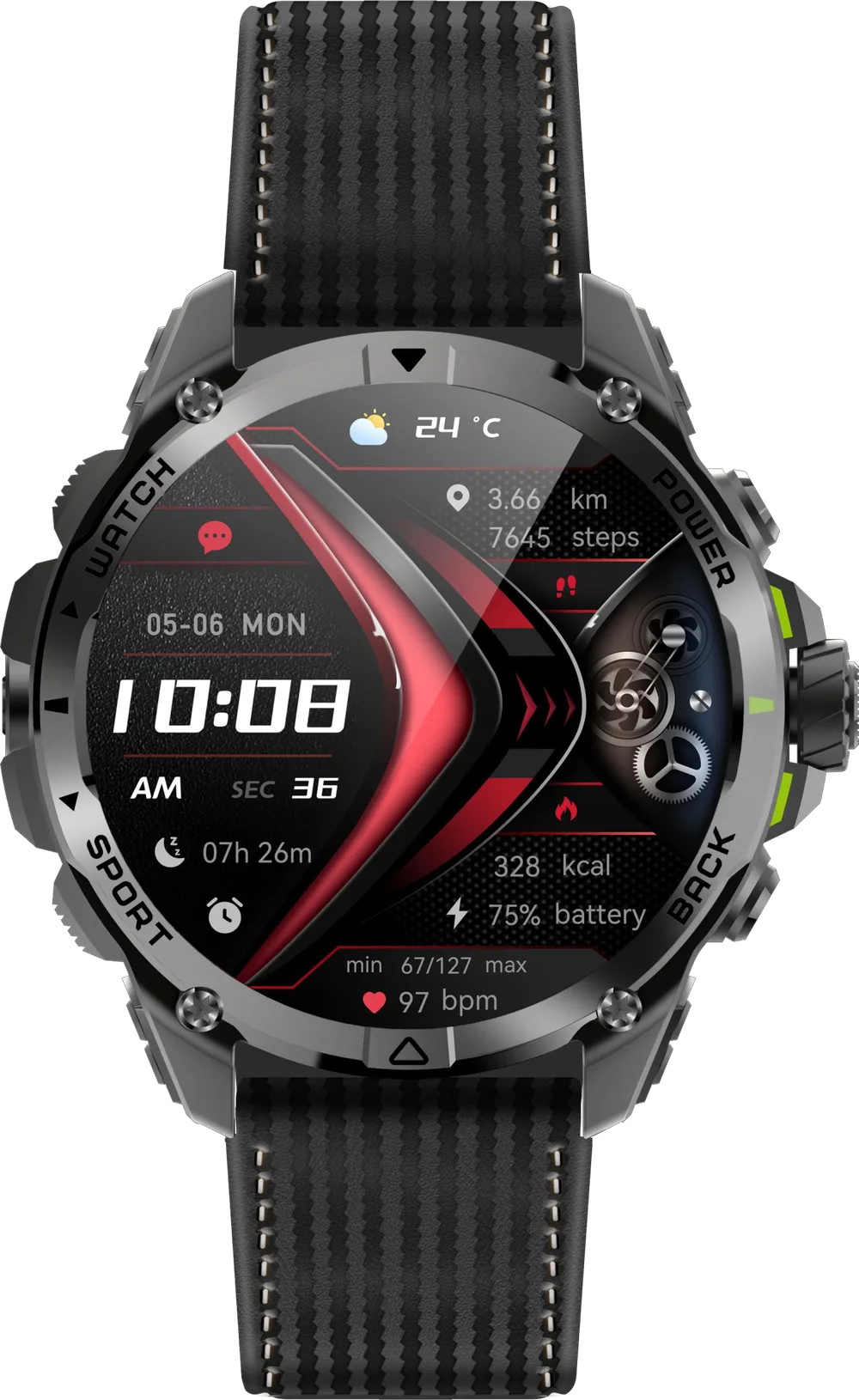
- Watch GT: Fresnel heart rate lens, plus 6-star GPS and a barometer for outdoor workouts.
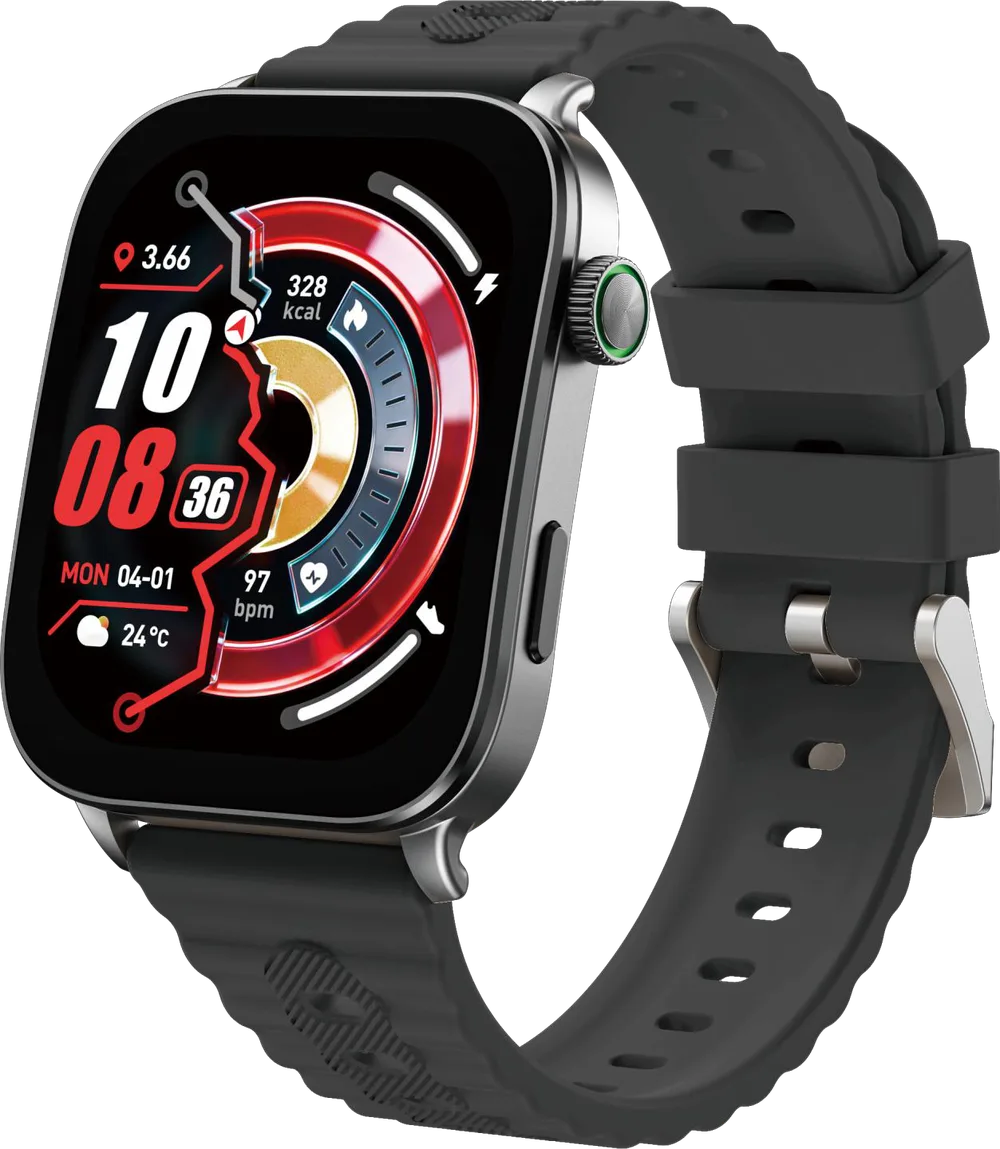
- Watch Nova 2 Air: bright 1.95-inch AMOLED that makes health data easy to read, with exercise tracking.
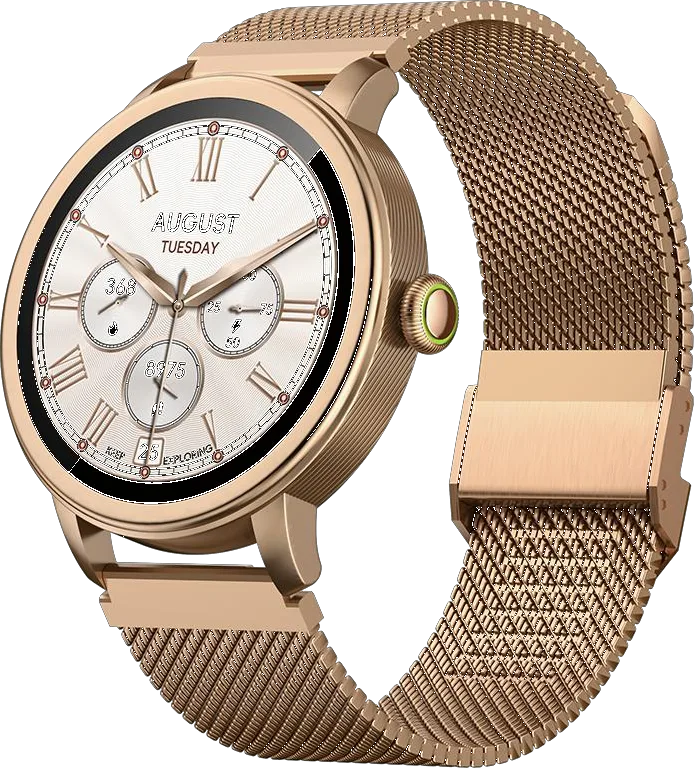
- Watch Muse: adds a female health function and a customised interface.
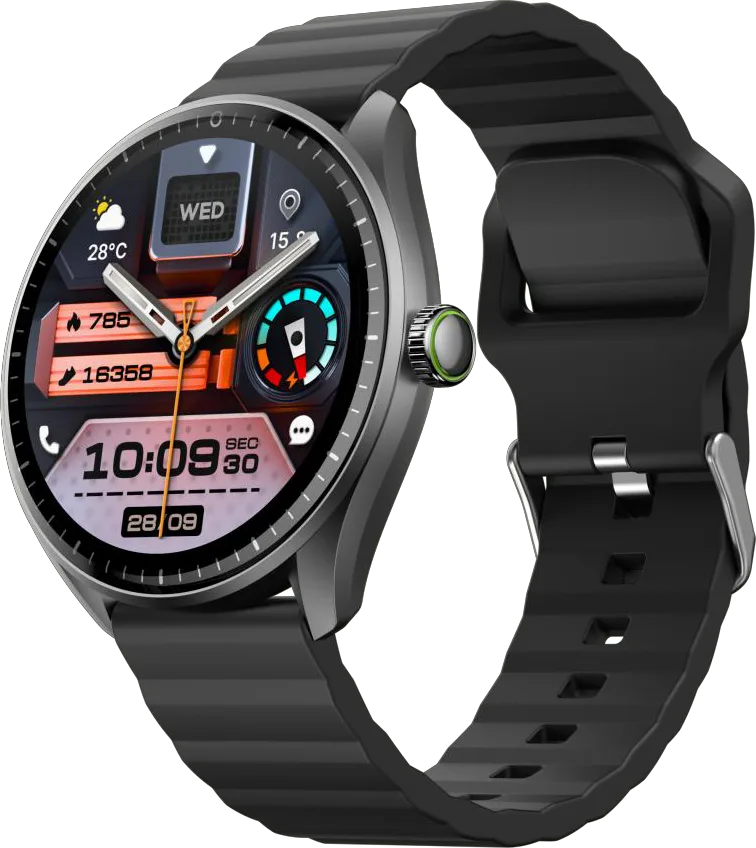
- Watch Nova 2R Lite: classic round AMOLED, IP68 and up to 10 days of normal use.
- Watch 6N: the value option with the same core health features.
Compare the full range in our oraimo smart watch guide, browse the smart watches category, and see how to connect an oraimo smart watch to your phone once yours arrives.
How to buy in the UAE
oraimo smart watches are available at our store in Al Murar, Deira, Dubai (8th Street, near Gold Souq metro station) and by WhatsApp at +971 55 710 0340, with delivery across the UAE. As an authorized oraimo distributor, we sell 100% original products with a 1-year oraimo warranty, with replacement as per oraimo's policy (warranty details). Message us on WhatsApp for today's price. We are open Monday to Thursday and Saturday 10:00 to 21:30, Friday 15:00 to 21:30, and closed Sunday; directions are on our contact page.